

Quick answer: Bob Marley died in 1981 without a will, so hundreds of millions of dollars in music royalties, copyrights, and business interests were ultimately administered and distributed through court-supervised estate proceedings under Jamaica’s intestacy laws, triggering decades of family disputes and litigation. His estate is a powerful reminder. Indeed, a valid will, a properly funded revocable living trust, and carefully chosen fiduciaries keep your legacy in your family’s hands instead of a courtroom’s.
Table of Contents
Legendary reggae icon Bob Marley passed away in 1981 at the age of 36. However, he left behind more than a musical legacy. He also left an estate without a valid will. His story has since become a source of powerful estate planning lessons. Above all, it shows how the absence of a plan leads to years of legal disputes, uncertainty, and family conflict. For families and business owners here in California, those lessons are just as relevant today.

Why Bob Marley Died Without a Will
Marley reportedly did not create a will because of his Rastafarian beliefs, which discouraged planning for death. As a result, Jamaica’s intestacy laws governed his estate rather than his own wishes.
At the time of his death, Marley owned valuable assets that extended far beyond real estate and personal property. His estate included music royalties, copyrights, publishing rights, trademarks, business interests, and the commercial value of his name, image, and likeness. Over time, these assets grew to hundreds of millions of dollars. Because no estate plan said who should receive or control them, each one travelled through estate administration and litigation.
The Probate Challenges
Because there was no will identifying beneficiaries or nominating a personal representative, commonly called an executor, the administration of Marley’s estate became significantly more complicated. Among the issues that arose were:
- Questions concerning the identity of the lawful heirs and who would manage the estate.
- Disputes involving family members, advisors, and business associates.
- Litigation concerning ownership of companies connected to the estate.
- Allegations of forged documents and improper transfers of estate assets.
- Legal battles over copyrights, trademarks, licensing rights, and control of Bob Marley’s name and likeness.
Court proceedings continued for years. Several lawsuits followed in both Jamaica and the United States. Meanwhile, court decisions addressed claims worth millions of dollars. The legal disputes became a cautionary example frequently cited by estate planning professionals, including our team here in the Bay Area.
Don’t leave your family guessing. Put your wishes in writing.

The Cost of Dying Without a Will
While Bob Marley’s music continues to inspire generations, the years following his death demonstrate how failing to prepare an estate plan can create unnecessary hardship for surviving loved ones. Without clear legal instructions:
- Formal probate or other court-supervised estate administration may become necessary, resulting in additional time, court supervision, and legal expense.
- Family members may disagree about who should inherit or make decisions.
- Valuable intellectual property can become tied up in litigation.
- Applicable intestacy laws determine who inherits, while the court oversees the administration of the estate.
- Legal fees and administrative costs can reduce the value of the estate.
A properly prepared estate plan could have reduced or avoided many of these challenges. The same is true in California, where formal probate is a public, court-supervised process that can take many months to well over a year. California calculates statutory attorney’s fees and personal representative compensation from the gross value of the probate estate. Notably, that figure ignores the net equity you actually own. A single unplanned home in Santa Clara County may be enough to require a costly, public probate proceeding.
Worried probate could drain your estate? Let’s build a plan that avoids it.
Estate Planning Lessons from Bob Marley
Bob Marley’s story offers several important lessons for families and business owners alike:
Create a valid will. A will allows you to decide who receives your assets instead of leaving those decisions to state or national intestacy laws.
Consider establishing and funding a trust. Assets you title in the name of a revocable living trust generally avoid formal California probate. In addition, they offer greater privacy and a simpler administration after death.
Protect intellectual property. Musicians, artists, writers, entrepreneurs, and content creators carry a longer list. Specifically, their plans should address copyrights, trademarks, royalties, licensing rights, and rights of publicity.
Choose trusted fiduciaries. Reliable personal representatives, successor trustees, and agents under powers of attorney carry out your wishes responsibly.
Review your estate plan regularly. Family changes, new assets, and evolving laws make periodic updates essential.

How California Families Can Protect Their Legacy
You don’t need a music catalog worth hundreds of millions of dollars for these lessons to matter. For most California families, the same principles apply to a home, retirement accounts, a small business, or a growing family:
- A revocable living trust: assets properly transferred to it generally pass to the trust beneficiaries without formal California probate administration, often with greater privacy, less court involvement, and a more efficient administration process.
- A pour-over will works alongside your trust and names a guardian for minor children.
- A durable financial power of attorney and an advance health care directive protect you while you are living. Specifically, they matter if illness or incapacity stops you from managing your own money or medical care.
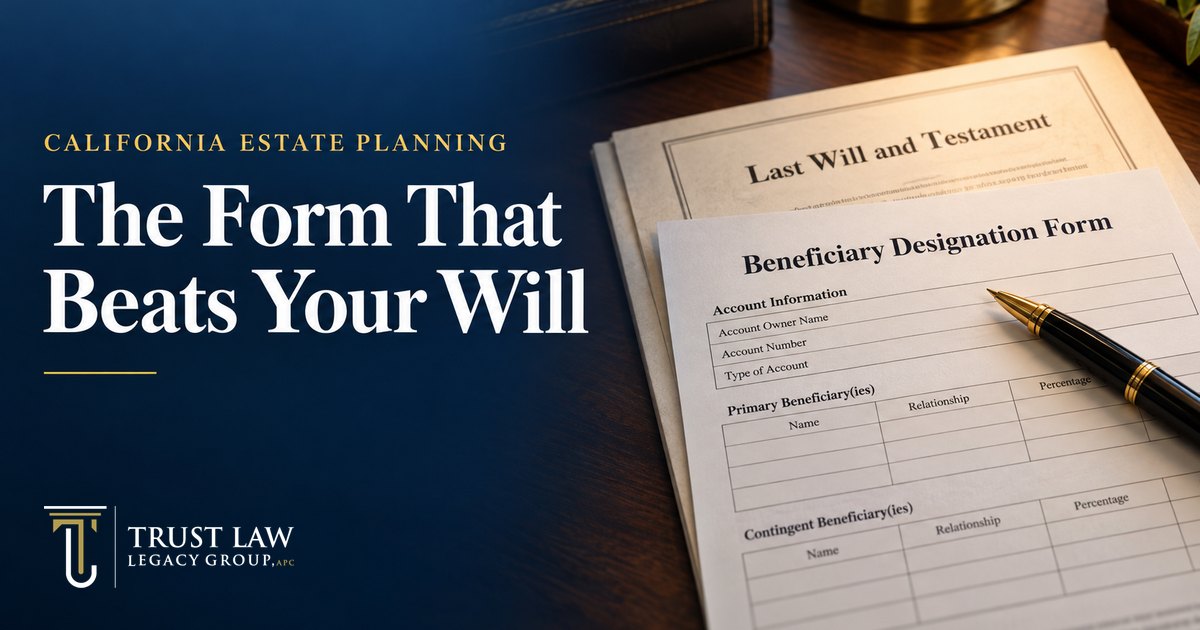
- Up-to-date beneficiary designations on life insurance and retirement accounts keep those assets aligned with your overall plan.
At Trust Law Legacy Group, we walk families in San Jose, Santa Clara County, and throughout the Bay Area through each of these decisions in a single, unhurried design meeting, so your plan reflects your wishes, not a court’s default rules. You can review the basics of the court process on the California Courts probate self-help pages, but remember that every family’s estate planning lessons look a little different.
Frequently Asked Questions
What happens if you die without a will in California?
California’s intestate succession laws decide who inherits probate assets. Instead of following your wishes, they look to your surviving relatives, such as a spouse, children, parents, or more distant kin. The nature, value, and title of the assets decide what happens next. In many cases, formal probate or another court proceeding must come first.
Does a living trust avoid probate in California?
Generally, yes. Assets you transfer into a revocable living trust generally avoid California’s formal probate process. Consequently, the family saves time and expense, and most details stay private. Assets left outside the trust at death may still require probate unless another probate-avoidance method applies.
Why is dying without a will so costly?
Without a comprehensive estate plan, the family usually faces formal probate or another court-supervised proceeding. That can mean longer timelines, statutory attorney’s fees and compensation for the personal representative based on the gross value of the probate estate, and a greater risk of disputes among heirs, exactly the kind of conflict that affected the Marley estate for years.
How does estate planning protect intellectual property and royalties?
Copyrights, trademarks, royalty rights, licensing agreements, rights of publicity, and related business interests are assets that can be addressed through a will, trust, and properly coordinated contracts or ownership structures. This allows creators and business owners to select who will manage and benefit from their work rather than leaving those decisions to default law and court-supervised administration.
How often should I update my estate plan?
Review your plan after major life events (marriage, divorce, births, deaths, a new business, or a move) and periodically as laws change, generally every three to five years.
Final Thoughts
Bob Marley’s legacy lives on through his music, but his estate illustrates the consequences of leaving important decisions unresolved. The estate planning lessons here are clear: when there is no will or comprehensive plan, grieving families may face years of court proceedings, legal expenses, and conflict over assets and authority.
Estate planning is not only about transferring wealth. It is about protecting your loved ones, preserving your legacy, and providing clarity during one of life’s most difficult moments.
Keep your legacy in your family’s hands, not the court’s.
Key Takeaway
Bob Marley’s estate reminds us that failing to create a clear estate plan can leave default inheritance laws and court-supervised administration, not your carefully expressed wishes, in control of your legacy. A comprehensive California estate plan, which may include a revocable living trust, pour-over will, durable financial power of attorney, advance health care directive, and carefully selected fiduciaries, can help ensure your wishes are carried out with minimal court involvement.
This article is for general informational purposes only and does not constitute legal advice, nor does it create an attorney-client relationship. Estate planning laws vary and change over time. For guidance specific to your situation, please schedule a design meeting with a licensed California estate planning attorney.
Related Guides to Read Next
Next, read another public probate dispute lesson, trust dispute lessons, and estate litigation services.
Ready to put a plan in place? See how our San Jose estate planning attorneys help families with wills, trusts, powers of attorney, and healthcare directives.